
Services
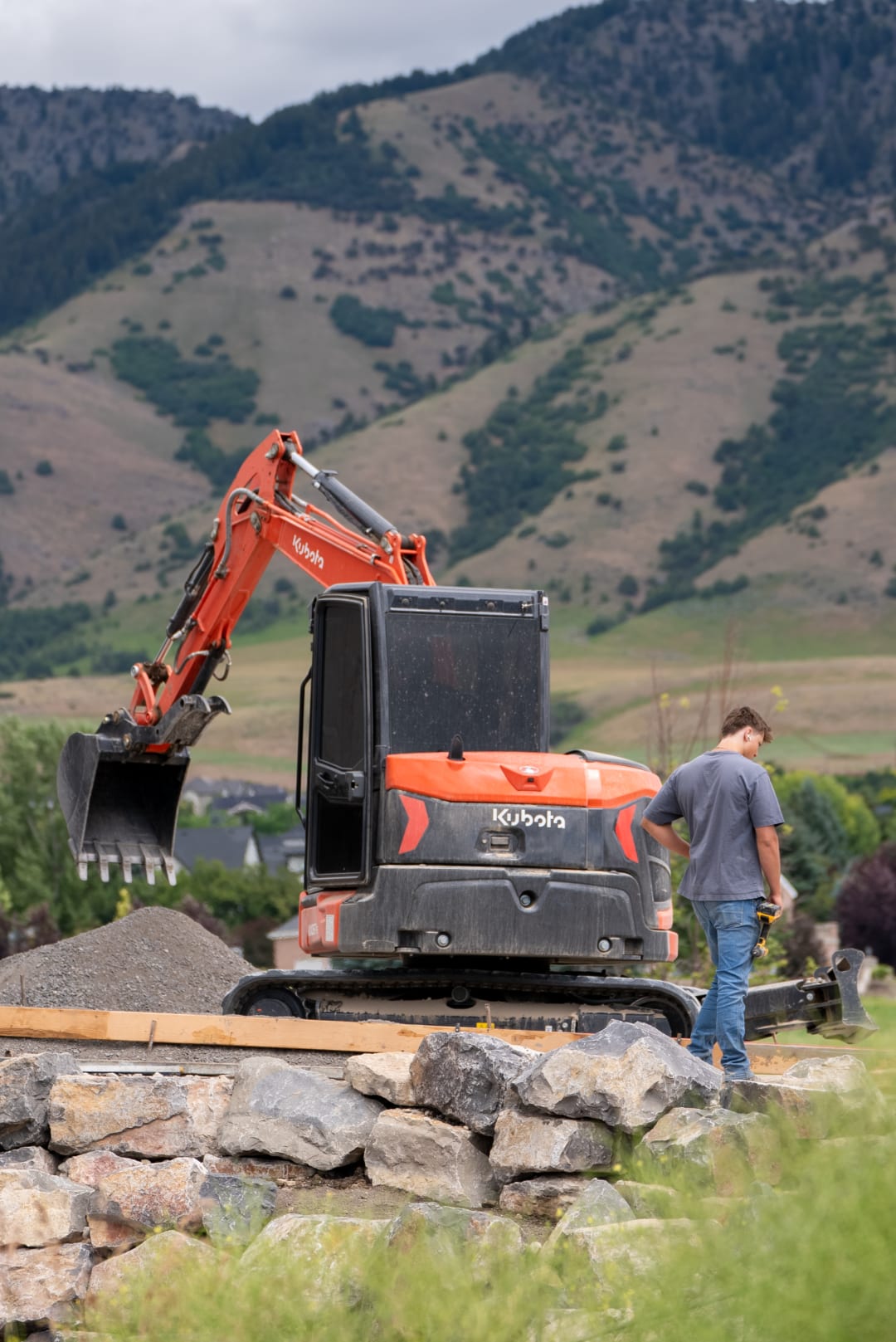
Retaining Walls
I build rock and block retaining walls that hold because the part you never see gets done right: the bench, the drain rock, the compacted base. Most failed walls in this valley failed at the drainage.
What it actually involves
A retaining wall is a drainage structure that happens to hold dirt. The rock is the last 20% of the job. The bench cut, compacted base, drain rock, and fabric are the 80% you never see, and they decide whether the wall is still straight in ten winters.
What it costs, and what drives it
Boulder and block walls typically run $20–$50 per face-foot installed. What moves the number:
- Height: over about 4 feet can require engineering, depending on the city
- Material: local boulder vs. block
- Drainage scope: how far the water has to be carried
- Access: rock gets expensive when every boulder has to be walked in
If your wall needs an engineer, you’ll hear it at the walk-through, before you’ve spent anything.
Why walls fail here
Most failed walls I see failed at the water, not the rock. Valley clay drains poorly, and snowmelt makes the hillside behind a wall heavier every spring. No drain rock and fabric means wet clay with nowhere to push except out.
Bear Lake ground is different: rockier, thinner soils, seasonal access. Walls there are usually terracing flat ground out of a slope, and good rock is often already on site.